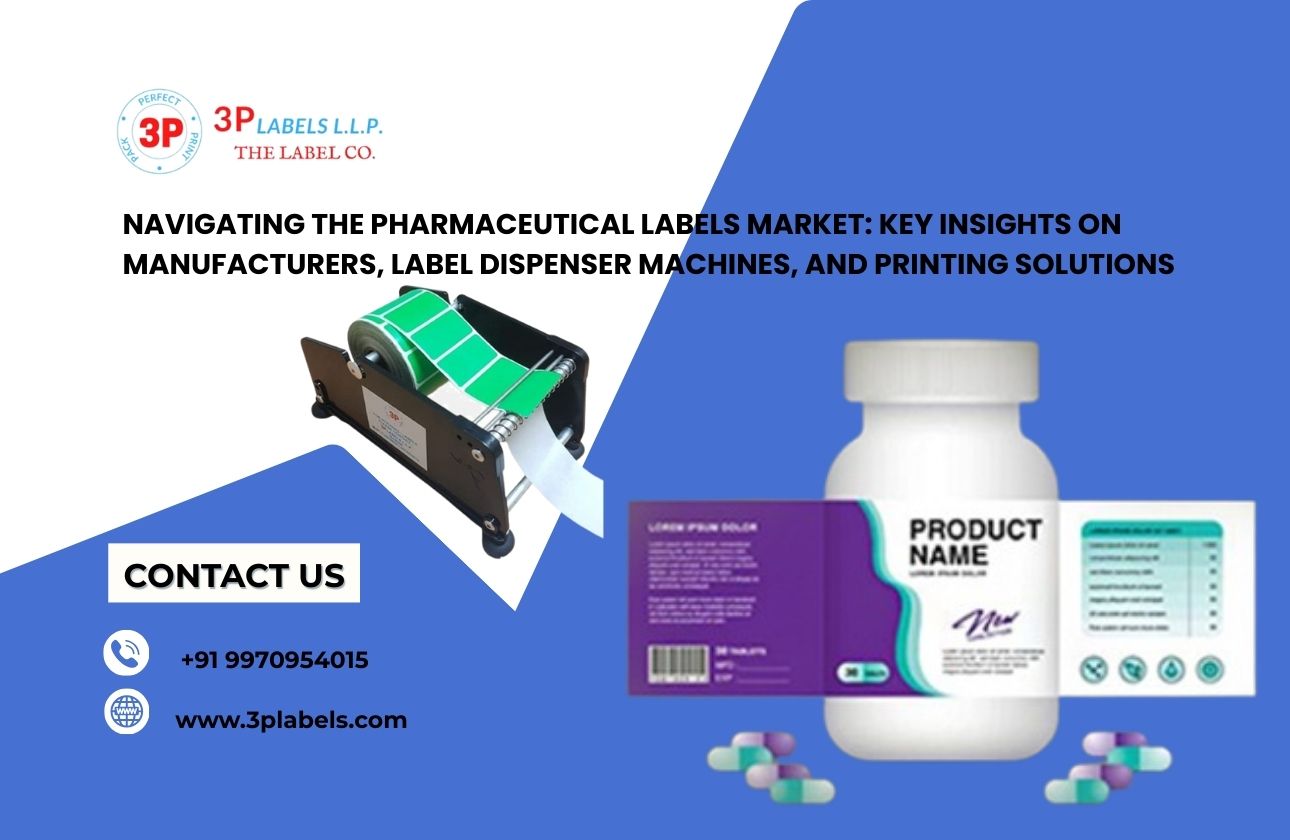
Navigating the Pharmaceutical Labels Market: Key Insights on Manufacturers, Label Dispenser Machines, and Printing Solutions
The pharmaceutical industry is one of the most regulated sectors worldwide, requiring meticulous attention to labeling. As a pivotal component for ensuring safety, compliance, and efficiency, pharmaceutical labels have a significant role to play. In this blog post, we delve into the world of pharmaceutical labels, examining key manufacturers, the costs and benefits of label dispenser machines, and the latest trends in printing technology.
Understanding the Role of Pharmaceutical Labels Manufacturers
Pharmaceutical labels manufacturers are essential in facilitating the compliance and safety of medicinal products. These manufacturers specialize in producing labels that meet strict governmental and industry standards, ensuring high quality and precision. Key players in the market include companies like Avery Dennison, CCL Industries, and Multi-Color Corporation, all known for their innovation and reliability.
Choosing the right manufacturer involves considering factors such as the quality of materials, production capacity, customization capabilities, and certifications that affirm adherence to compliance requirements.
The Economics of Label Dispenser Machines
Label dispenser machines are essential in increasing production efficiency by automating the labeling process. The Label Dispenser machine price varies significantly depending on features, automation level, and production capacity. Entry-level manual dispensers might start at a few hundred dollars, while automated systems with advanced features could range up to several thousand dollars.
Investing in a high-quality label dispenser machine can lead to long-term cost savings by reducing labor costs and minimizing label wastage.
Innovative Trends in Pharmaceutical Labels Printing
Technology for Pharmaceutical Labels printing has advanced significantly, emphasizing clarity, durability, and adaptability. New printing solutions include digital printing, which allows for quick turnaround times and customization, and conventional flexographic printing, known for producing durable labels suitable for harsh environments.
Pharmaceutical companies are increasingly opting for eco-friendly inks and materials, aligning with the sustainability trends gripping the industry. Furthermore, technologies such as RFID labels and QR codes are becoming more prevalent, allowing for enhanced tracking, security, and consumer engagement.
Conclusion
The pharmaceutical labels industry is continuously evolving, driven by the need for better compliance, efficiency, and innovation. By understanding the dynamics of Pharmaceutical labels manufacturers, the cost implications of investing in label dispenser machines, and the latest in printing technology, businesses can make informed decisions that align with their operational goals. Ultimately, staying ahead in the pharmaceutical labels market requires a proactive approach to embracing technological advancements while ensuring unwavering adherence to industry standards.
Published on January 12, 2026 by Admin